

Your hands do more work than almost any other part of your body: typing, cooking, buttoning a shirt, opening a jar, holding a steering wheel. So when something starts to feel off in your fingers or knuckles, it’s easy to brush it aside as a busy week catching up with you. But persistent stiffness, aching, or swelling in the hands is often one of the earliest arthritis symptoms, and catching it early can make a real difference in how well your joints hold up over time.
This guide walks through the early warning signs of arthritis in the hands and fingers, why they happen, and when it’s time to talk to a specialist.
Why the Hands Are an Early Warning System for Arthritis
The hand contains dozens of small joints packed into a tight space, each one working constantly throughout the day. That constant use means wear, and inflammation tends to surface here sooner than in larger, less-used joints. For many people, a sign of arthritis in fingers or knuckles shows up months, sometimes years, before it becomes noticeable anywhere else in the body.
Two conditions account for most hand arthritis cases:
Osteoarthritis (OA)
The cartilage that cushions the finger joints gradually wears down, usually appearing in the joints closest to the fingertips and at the base of the thumb.
Rheumatoid arthritis (RA)
An autoimmune condition that causes the immune system to attack the joint lining, typically producing symmetrical swelling in the knuckles of both hands.
Because these two types are treated differently, recognizing which pattern of early arthritis symptoms you’re experiencing is an important first step toward getting the right care.
Early Arthritis Symptoms in the Hands and Fingers

Hand arthritis rarely appears overnight. It tends to build gradually, often starting with symptoms mild enough to dismiss. Here are the signs worth paying attention to.
1. Morning Stiffness That Takes a While to Loosen Up
One of the most common early signs of arthritis is stiffness in the fingers first thing in the morning or after sitting still for a long stretch. Making a fist may feel tight or take longer than usual. In osteoarthritis, this stiffness typically eases within 30 minutes; in rheumatoid arthritis, it often lingers much longer and can be a useful clue for a specialist trying to distinguish between the two.
2. Swelling Around the Knuckles
Puffiness or visible swelling around the finger joints, particularly the ones closest to the palm, is a common early symptom. When swelling shows up symmetrically on both hands, it points more toward rheumatoid arthritis. Swelling limited to one or two joints, especially near the fingertips, is more typical of osteoarthritis.
3. A Weaker, Less Reliable Grip
If jar lids, doorknobs, or grocery bags suddenly feel harder to manage, it’s not necessarily a strength problem; it’s often an early arthritis symptom. Inflammation and joint changes make it harder for the hand to generate and sustain grip force, even before pain becomes constant.
4. Aching at the Base of the Thumb
The joint at the base of the thumb, called the carpometacarpal (CMC) joint, is one of the most frequent sites for early osteoarthritis in the hand. It bears a surprising amount of load during pinching, writing, and turning motions, so aching or a dull ache here during everyday tasks is a sign worth noting.
5. Small Bumps Near the Finger Joints
Bony nodules that develop near the finger joints, known as Heberden’s nodes (near the fingertip joints) and Bouchard’s nodes (at the middle joints), are a hallmark of osteoarthritis. They tend to build slowly and may be tender when they first form, even if they later become painless.
6. A Grinding or Clicking Feeling
A rough, grating sensation when bending or straightening the fingers, sometimes called crepitus, suggests the smooth cartilage surface in the joint is starting to break down. It’s often one of the more overlooked signs of arthritis because it doesn’t always come with pain.
7. Warmth or Redness in the Joints
Joints that feel warm to the touch or appear slightly red, especially alongside swelling, often signal active inflammation. This symptom is more closely associated with rheumatoid or other inflammatory forms of arthritis than with straightforward wear-and-tear osteoarthritis.
8. Fingers That Start to Change Shape
In later stages, joints may begin to angle or drift out of alignment. While this is a more advanced sign rather than an early one, noticing even subtle shifts in how a finger sits can be a useful early flag, particularly if it develops alongside the symptoms above.
Why These Symptoms Get Ignored
Early arthritis symptoms are easy to explain away. A stiff hand in the morning gets blamed on a sleeping position. A sore thumb gets blamed on too much time on the phone. Because symptoms often come and go in the early stages, especially with rheumatoid arthritis, many people wait months or years before mentioning it to a doctor.
The problem with waiting is that joint damage from arthritis is progressive. Cartilage that has broken down doesn’t grow back, and inflammation left unchecked in rheumatoid arthritis can lead to permanent joint changes. Identifying a sign of arthritis early gives you access to treatment options that simply aren’t as effective once damage has advanced.
What Causes Arthritis in the Hands?
Several factors influence why arthritis develops in the hands specifically:
- Age: cartilage naturally thins with age, raising the risk of osteoarthritis
- Repetitive use: jobs or hobbies involving repeated gripping, typing, or fine motor work
- Previous injury: old fractures or ligament injuries in the hand or wrist
- Genetics: a family history of osteoarthritis or autoimmune disease
- Autoimmune activity: in rheumatoid arthritis, the immune system itself drives joint inflammation
- Hormonal factors: hand osteoarthritis is notably more common in women, particularly after menopause
How Hand Arthritis Is Diagnosed
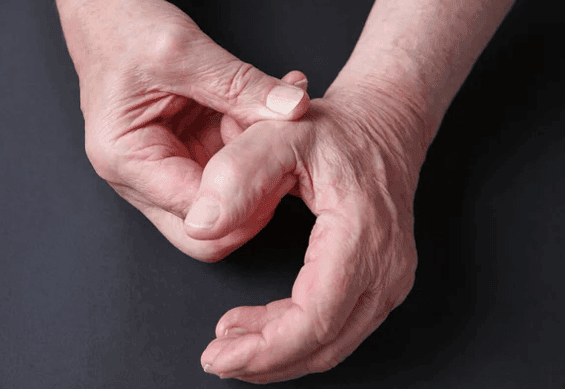
A specialist typically evaluates hand arthritis through a combination of a physical exam checking swelling, tenderness, and range of motion; a review of your symptom history, including when stiffness or pain occurs and how long it lasts; imaging such as X-rays to assess joint space and cartilage loss; and, when an inflammatory or autoimmune cause is suspected, bloodwork to help distinguish rheumatoid arthritis from osteoarthritis.
Getting the right diagnosis matters because the two most common types of hand arthritis are managed quite differently, and starting the wrong approach can delay real relief.
Treatment Options for Early Hand Arthritis
The good news is that early-stage hand arthritis often responds well to conservative care. Common approaches include:
- Activity and ergonomic adjustments to reduce repetitive strain on affected joints
- Hand therapy or occupational therapy to preserve range of motion and build supportive strength
- Splinting, particularly for thumb-base arthritis, to reduce load on the joint during daily tasks
- Anti-inflammatory medication to manage pain and swelling
- Corticosteroid injections for joints with persistent inflammation
- Surgical options, such as joint fusion or replacement, reserved for advanced cases that no longer respond to conservative treatment
Most patients start with non-surgical Arthritis Treatment Clifton NJ patients trust, escalating to more advanced care only if symptoms progress.
When to See a Bone and Joint Surgeon
It’s worth scheduling an evaluation with bone and joint surgeons Clifton, NJ patients rely on if you notice the following:
- Hand or finger stiffness, swelling, or pain lasting more than two to three weeks
- Symptoms that keep coming back or are getting worse over time
- Grip weakness that’s interfering with daily tasks
- Visible bumps, swelling, or changes in how your fingers sit
- Warmth, redness, or symmetrical swelling in both hands
The earlier a sign of arthritis is evaluated, the more treatment options remain available, and the better the long-term outlook for preserving hand function.
Protect Your Hands Before Symptoms Progress
Early arthritis symptoms in the hands, from morning stiffness to a weakening grip, are your body’s way of asking for attention before the damage becomes harder to manage. Sean Thompson, MD, Bone & Joint Surgeon, provides personalized evaluations and Arthritis Treatment Clifton, NJ patients turn to for lasting relief, along with care for patients in Jamaica, NY; New York City, NY; and Englewood, NJ.
Schedule Your Arthritis Consultation Today: 777 Passaic Ave. #575, Clifton, NJ 07012 | (201) 387-0499
Frequently Asked Questions
What is the earliest sign of arthritis in the hands?
Morning stiffness in the fingers that takes time to loosen up is usually the earliest sign, often followed by mild swelling around the knuckles or aching at the base of the thumb.
How can I tell if my hand pain is arthritis or something else?
Arthritis-related hand pain typically comes with stiffness, swelling, or a reduced range of motion that persists for weeks rather than days. Pain from a strain or minor injury tends to improve within a few days.
Does arthritis in the hands always affect both sides?
Not always. Rheumatoid arthritis commonly causes symmetrical symptoms in both hands, while osteoarthritis often starts in just one hand or a single joint before potentially spreading.
Can hand arthritis be managed without surgery?
Yes. Many patients manage early hand arthritis effectively with splinting, activity changes, hand therapy, and anti-inflammatory treatment. Surgery is typically reserved for advanced cases that no longer respond to conservative care.
When should I see a bone and joint surgeon about hand arthritis?
See a specialist if stiffness, swelling, or pain in your fingers lasts more than two to three weeks, keeps recurring, or starts to affect your grip and daily activities.