Go to the Emergency Room (ER) for an open fracture, a visibly deformed joint, uncontrolled bleeding, numbness, or any injury paired with chest pain, head trauma, or loss of consciousness. For everything else involving a bone, joint, ligament, or tendon – a swollen ankle, a knee that “gave out,” a shoulder that won’t lift, or a fracture that isn’t through the skin – an orthopedic urgent care or same-week visit with an orthopedic specialist is faster, cheaper, and gets you to the right treatment sooner than a general ER visit. Sean Thompson MD sees these cases every week at his Clifton, Englewood, Jamaica, and New York City offices.
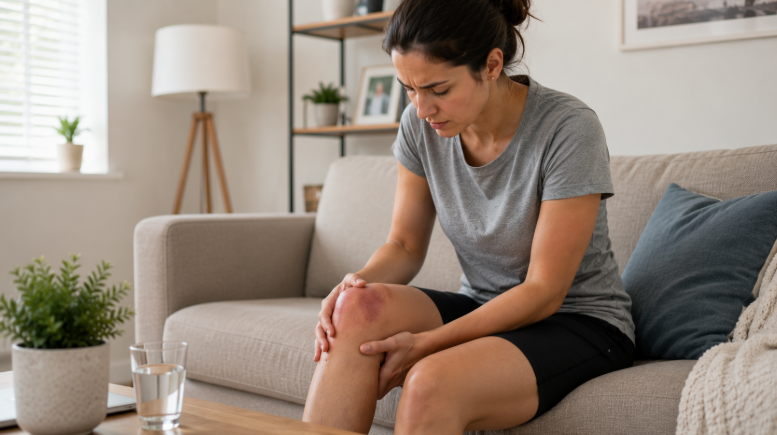
It’s 9 p.m. Your ankle is the size of a grapefruit, or your dad just came in from the driveway holding his wrist at an angle wrists aren’t supposed to bend. Every instinct says “hospital,” but which one? The ER down the block, or an orthopedic specialist?
Most people have never had to think about this question until the moment they’re standing in their kitchen icing a joint and googling it. So let’s actually answer it – clearly, honestly, and without the medical jargon that makes this decision harder than it needs to be.
Orthopedic Urgent Care vs. the ER: What’s Actually Different?
The ER is built for one job: keeping you alive and stable when something could be life-threatening. That’s exactly what it should be used for – chest pain, severe head injuries, uncontrolled bleeding, or trauma involving more than one part of the body.
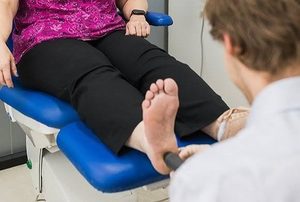
An orthopedic urgent care (or a same-day visit with an orthopedic doctor) is built for a narrower, more specific job: diagnosing and treating problems with your bones, joints, muscles, ligaments, and tendons. That’s it. No waiting behind a cardiac patient. No general ER doctor guessing at a joint injury before referring you out anyway.
Here’s the part most people don’t realize: a large share of ER visits for sprains, fractures, and joint injuries end with the ER doctor stabilizing the injury and telling the patient to “follow up with an orthopedic specialist” within a few days. If the injury isn’t life-threatening, you can often skip that extra step, save hundreds of dollars in ER facility fees, and get seen directly by the surgeon who will actually manage your care – sometimes on the very same day.
When You Should Go Straight to the ER
Some injuries genuinely cannot wait, and no orthopedic office – however good – is equipped to handle them. Head to the emergency room immediately if you notice:
- A bone visibly poking through the skin – what’s clinically known as an open fracture, or compound fracture. This type of break carries a high risk of infection and needs emergency cleaning and stabilization before any orthopedic follow-up care can begin.
- A joint that looks obviously out of place – a dislocated shoulder, hip, or kneecap
- Heavy or uncontrolled bleeding
- Loss of feeling, cold or blue skin, or no pulse below an injury (a sign of blocked blood flow)
- The injury happened alongside a head injury, chest pain, or trouble breathing
- A high-energy trauma – a car accident, a fall from height, or a serious sports collision
These situations need imaging, monitoring, and sometimes emergency surgery under conditions only a hospital ER can provide. Don’t try to “tough it out” or drive yourself somewhere else first – call 911 or get to the nearest emergency room.
When Orthopedic Urgent Care Is the Smarter Move
If none of the red flags above apply, there’s a very good chance your injury falls into orthopedic territory – meaning a specialist, not a general ER, is the right first stop. This includes:
- A sprained or swollen ankle, knee, or wrist that you can still move, even if it hurts
- A knee that buckled, “gave out,” or made a popping sound during a sport or a fall – a classic case for sports medicine evaluation rather than a general ER workup
- A shoulder you can’t lift overhead, with pain that started suddenly or built up over days
- A finger or toe that’s jammed, bruised, or slightly crooked but not through the skin
- Pain and swelling after a fall with no obvious deformity and the ability to bear at least some weight
- A fracture that’s closed (no break in the skin) and you’re not in extreme pain – this is squarely within the scope of orthopedic trauma care
- Ongoing joint pain that suddenly got worse – a flare of arthritis, a locked knee, or a hip that’s stopped cooperating, all part of everyday general orthopedic care
In these cases, going to an orthopedic specialist first means the person examining your X-ray is the same person who would perform your treatment if you needed a cast, a brace, an injection, minimally invasive arthroscopic surgery, or eventually joint replacement – not a generalist deciding whether to refer you elsewhere.
Not Sure Which One You Need? Let Us Help You Decide.
If you’re dealing with a bone, joint, or sports injury and you’re not sure whether it’s an emergency, call Dr. Sean Thompson’s office before you decide where to go. With locations in Clifton, Englewood, Jamaica, and New York City, expert orthopedic care is closer than you think.
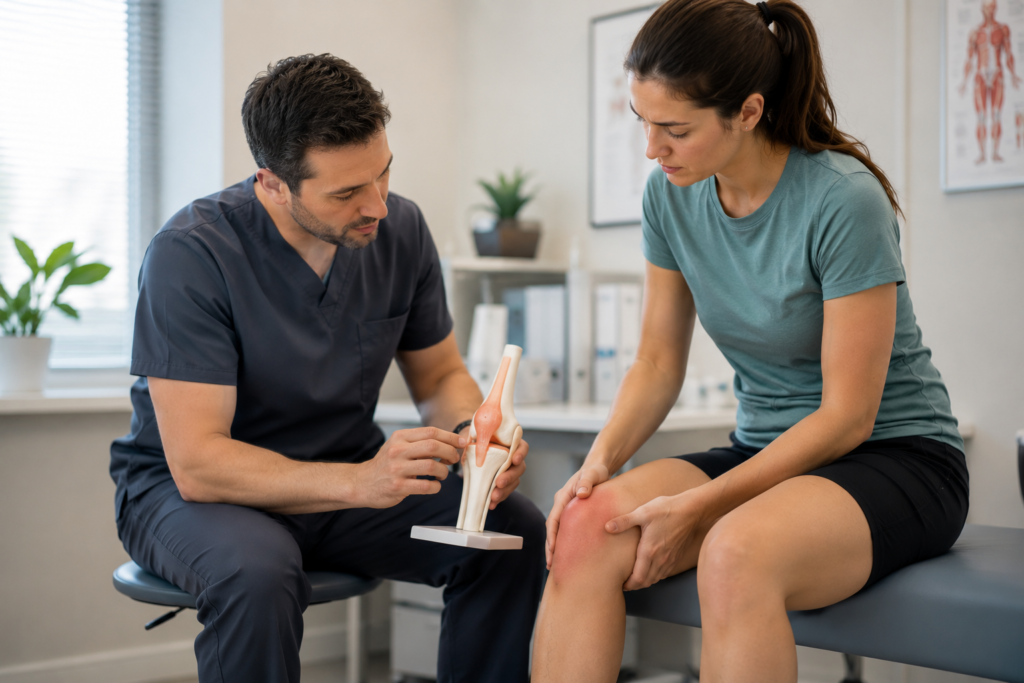
Why This Decision Matters More Than You’d Think
Speed to the right diagnosis. A general ER doctor sees everything from heart attacks to appendicitis in a single shift. An orthopedic specialist looks at bones and joints all day. That focus tends to mean a faster, more precise read on your imaging.
Cost. ER visits carry a facility fee before treatment even begins – often the single largest line item on the bill. An orthopedic urgent care or specialist visit is typically billed like a standard office visit, and most major insurance plans, including the ones accepted at East Coast Bone and Joint Surgeons, apply lower copays to it.
Continuity of care. If you break a bone in the ER on a Friday night, you’ll likely be handed a splint and a referral slip. If you go straight to an orthopedic specialist, the person treating your fracture on day one is often the same person managing your recovery on week six.
Wait times. Non-life-threatening orthopedic injuries are rarely a top ER priority, which means longer waits behind more urgent cases. Orthopedic-focused visits are built around exactly this type of injury, so the wait – and the visit itself – tends to be shorter.
A Simple Self-Check Before You Decide
Ask yourself these three questions:
- Can I move the joint at all, even a little, and put some weight on it? If yes, it’s less likely to be a surgical emergency.
- Is the skin broken over the injury, or is the joint visibly out of place? If yes, that’s an ER situation.
- Am I only in pain from the injury itself, with no chest pain, head injury, or trouble breathing? If yes, an orthopedic specialist can very likely take it from here.
If you’re still unsure, calling the office is always the fastest way to get a real answer – a member of the care team can often tell you over the phone whether same-day evaluation is appropriate, or whether you should go straight to the hospital.
Orthopedic Care Close to Home in NY and NJ
One reason people default to the ER is simple: they don’t know where else to go on short notice. Dr. Sean Thompson, a board-certified orthopedic surgeon with more than 17 years of experience, sees patients across four convenient locations so that expert bone and joint care is never far away, whether you’re dealing with a fresh injury or a condition that’s been building for months.
- Clifton, NJ – 777 Passaic Ave #575, Clifton, NJ 07012
- Englewood, NJ – 25 Rockwood Pl Suite 335, Englewood, NJ 07631
- Jamaica, Queens, NY – 175-61 Hillside Ave. #400, Jamaica, NY 11432
- New York City, NY – 1045 Park Ave Ground Floor, New York, NY 10028
Patients in Clifton and Passaic County often come in after weekend sports injuries or work-related strains that don’t need a hospital, just a quick, accurate diagnosis – the Clifton orthopedic trauma team sees this pattern constantly. In Englewood and Bergen County, many visits involve joint pain that’s been managed at home for too long, or a hip that’s finally interfering with daily life enough to look into hip replacement in Englewood. In Jamaica, Queens, the practice’s main office handles everything from acute sprains to full orthopedic trauma care. And on the Upper East Side of Manhattan, the New York City office serves patients who want board-certified, hospital-affiliated orthopedic care without the wait – or the bill – of an emergency room visit.
Wherever you’re located, the same standard applies: if it involves a bone, a joint, a ligament, or a tendon – and it isn’t life-threatening – an orthopedic specialist is very likely your fastest, most direct path to relief.
Frequently Asked Questions
Can an orthopedic doctor treat a broken bone, or do I need the ER?
An orthopedic doctor can treat most closed fractures – meaning the bone hasn’t broken through the skin – with casting, splinting, or, when needed, surgery. Only open fractures, fractures with major deformity, or breaks tied to a more serious trauma need to go through the ER first.
Do I need a referral to see an orthopedic surgeon after an injury?
Most patients do not need a referral to schedule directly with an orthopedic specialist. It’s worth calling your insurance provider to confirm your specific plan’s requirements, but same-day and next-day evaluations are typically available without one.
What happens if I go to the ER for a sprain instead of an orthopedic doctor?
The ER will usually X-ray the area, rule out a fracture, provide a brace or splint, and refer you to an orthopedic specialist for follow-up care anyway. Going to the specialist directly often means one visit instead of two, and a lower total cost.
Is a dislocated joint an ER emergency or can an orthopedic doctor pop it back into place?
A visibly dislocated joint should go to the ER first. Realigning a joint can involve sedation and requires monitoring for nerve or blood vessel involvement, which is best handled in a hospital setting before any follow-up orthopedic care begins.
How fast can I get an appointment with an orthopedic doctor for a new injury?
At East Coast Bone and Joint Surgeons, many new injuries – sprains, suspected fractures, sports injuries, and sudden joint pain – can be evaluated the same week, and often the same day, at the Clifton, Englewood, Jamaica, or New York City office nearest you.
Medical Disclaimer
This article is for general educational purposes and does not replace a medical evaluation. If you are experiencing a medical emergency, go to your nearest emergency room immediately.